
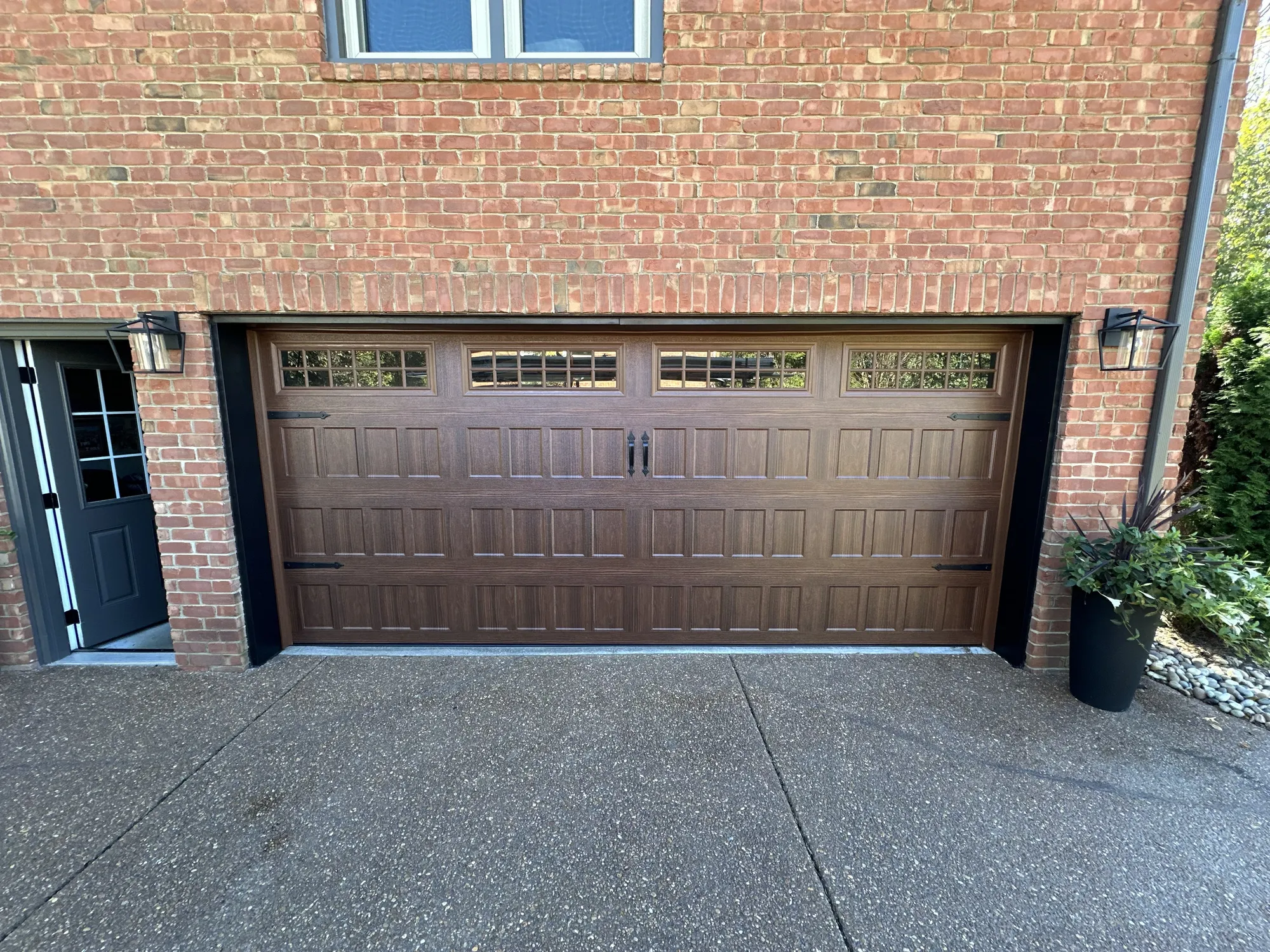
Custom garage doors
Traditional garage doors from raised panel to flush.
A traditional door is the sectional steel door most people picture, with a design pressed or set into its panels. Ours come from Amarr, and the choices are the insulation, the design, the glass and the color.
Get in touch with us at (615) 810-6415
How much insulation do you want?
- Steel back, R-value 9. Insulation sealed between the steel face and a steel back. The warmest traditional door we sell.
- Vinyl back, R-value 6. Insulation behind the steel face, finished with a vinyl back.
- Non-insulated. A single steel skin, for a detached garage or a shop that’s never heated.
A room over the garage is the best reason to go to R-9. That room shares a floor with the garage, and a garage that swings hot and cold makes it hard to keep comfortable.
Which panel designs are there?
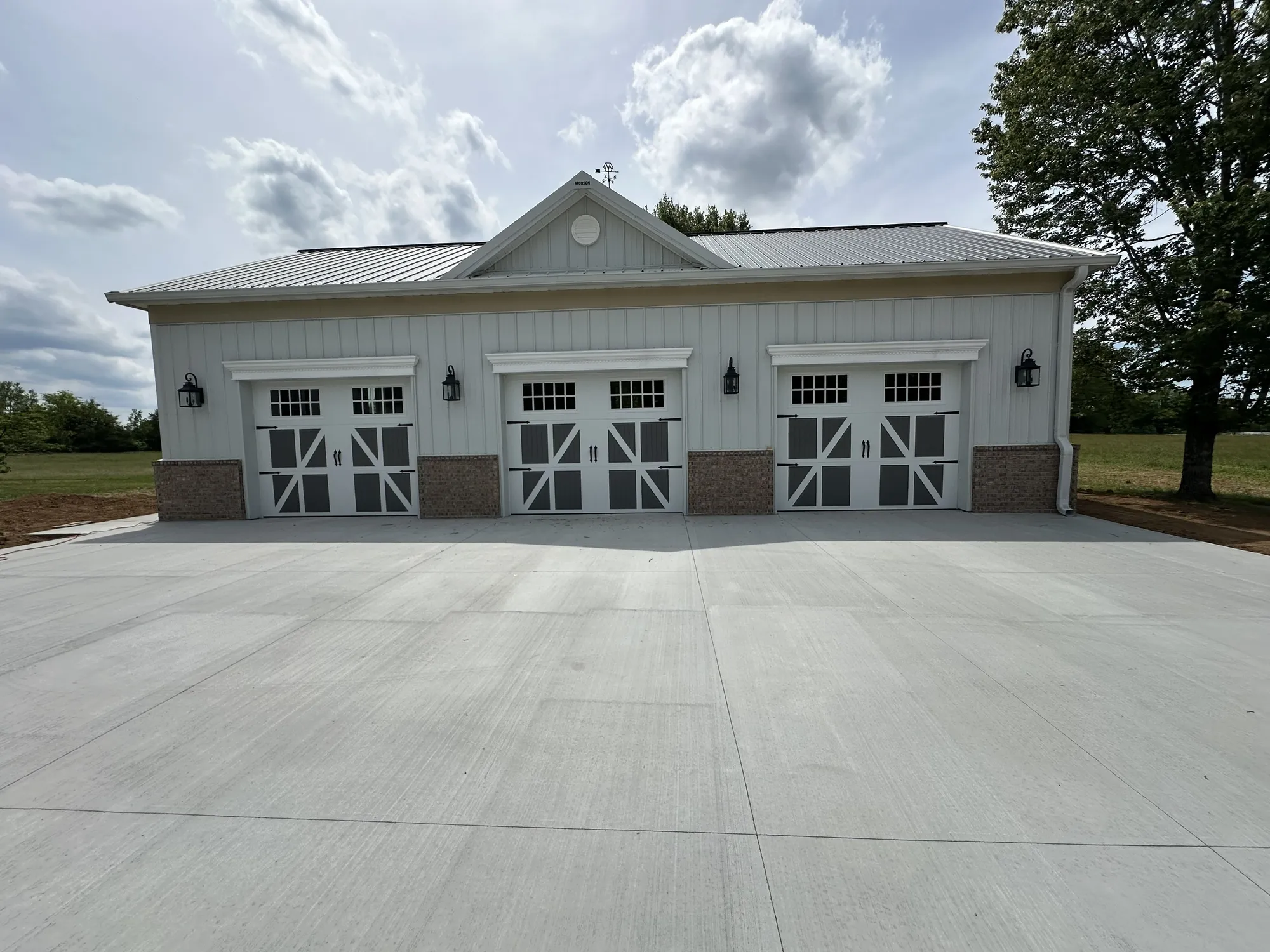
Raised panels, short or long; bead board; plank; recessed; flush; and Amarr’s Classica designs, which give a steel door the carriage-house look; the three white doors with gray X-brace panels pictured here are Classica. Raised panels sit well on most brick and colonial houses, flush on a modern one, and plank and bead board on the farmhouses and cottages in between.
Closed panels or glass?
Either. A traditional door can be closed panels all the way up, for privacy and the steadiest insulation, or take glass inserts, most often a row across the top section. With glass, the trade is between a decorative vinyl insert, which makes a broken pane easier to replace, and tempered glass with the design baked on, which is harder to break and costs more.
One tip from matching old doors: if your HOA allows it, a new glass design across every panel is often quicker than hunting for a match to a discontinued insert.
What colors do they come in?
Amarr’s own colors, or factory paint in any Sherwin-Williams color, so the door can match the trim or the shutters exactly rather than come close.
Is a traditional door the right choice?
For a lot of houses it’s the sensible one. Steel needs little upkeep, the insulation choices cover every kind of garage, and the designs above still make the door yours. If the house deserves something more, start at custom garage doors; if it’s a new door on an older house, garage door replacement covers what changes besides the door itself.
Answers
Traditional garage doors: questions people ask
What insulation options does a traditional garage door have?
Three, on our Amarr doors: a steel back at R-9, a vinyl back at R-6, or non-insulated. The steel back is the warmest and the stiffest; non-insulated suits a detached garage that’s never heated or cooled.
What garage door panel styles are there?
On the traditional doors we install: raised panel, short or long; bead board; plank; recessed; flush; and Classica, Amarr’s carriage-house look in steel. Any of them can be closed all the way up or take glass inserts.
Can a traditional garage door have windows?
Yes. Glass inserts usually go across the top section, and the choice is between a vinyl insert, where a broken pane is easier to replace, and tempered glass with a baked-on design, which is tougher. Glass lowers the insulation a little in the panels it replaces.
Can a steel garage door be painted to match the house?
Yes, at the factory. Besides Amarr’s own colors, the door can be ordered in any Sherwin-Williams color, so it matches the trim or shutters you already have instead of the nearest stock color.